Insurance-required wiring remediation · Riverside, CA
Your insurer flagged aluminum wiring in Riverside. Here’s the next step.
Your insurer flagged single-strand aluminum branch wiring, often associated with homes from the mid-1960s through early 1970s, on a 4-point or underwriting inspection. Ask for the required action, deadline, and acceptable proof in writing.
- General cost context$1,500–$8,000 (remediation); full rewire more as broad context; compare itemized local quotes.
- Deadline-first triageOrganize the carrier date and confirm the required proof before work begins.
- Paperwork checklistPulled electrical permit (City of Riverside Building & Safety or county)
Confirm you have aluminum branch wiring
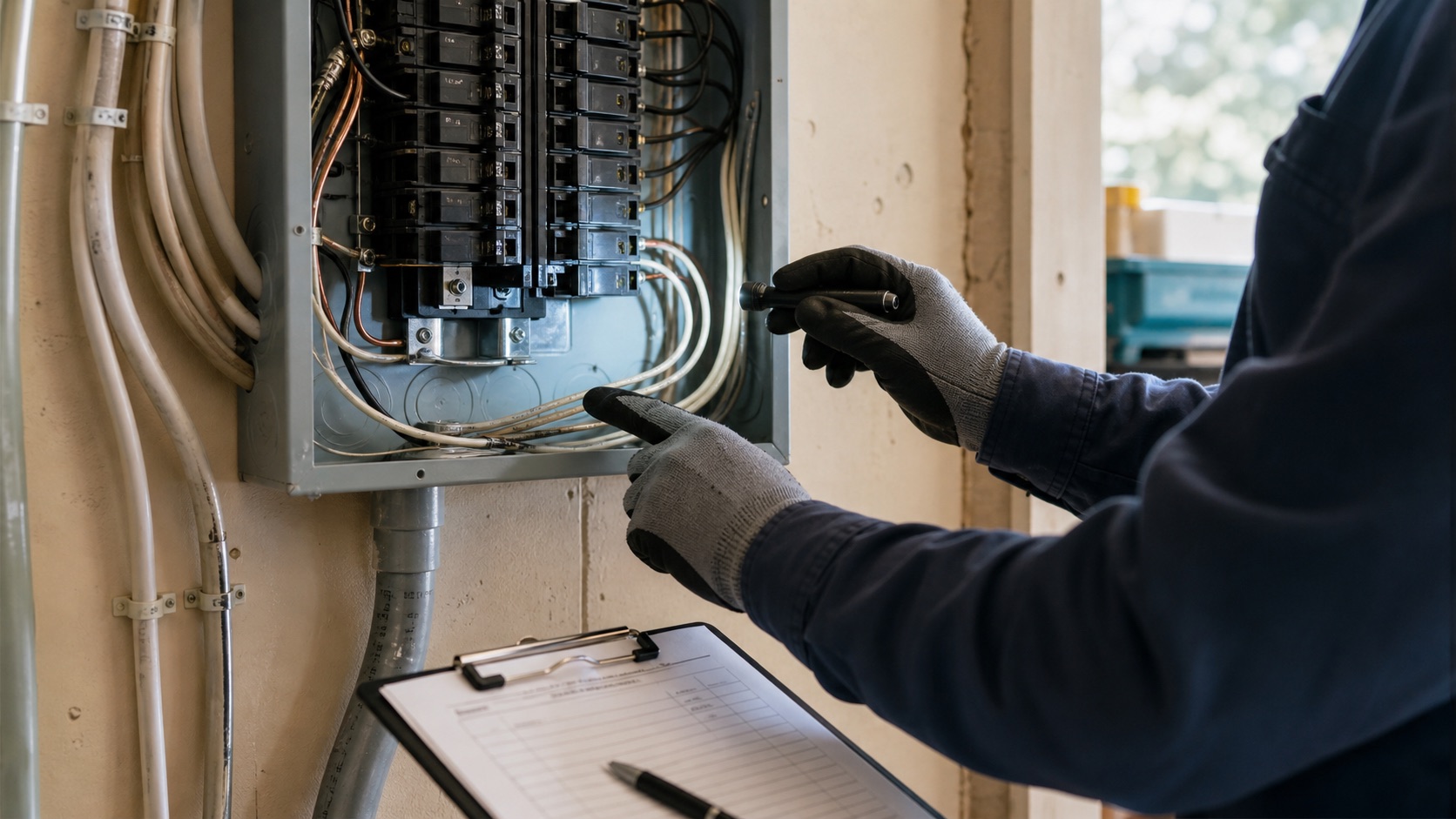
Aluminum branch wiring is single-strand and dull silver. Look at the cable jacket where wires enter the panel — it’s stamped “AL” or “ALUMINUM”. Do not pull devices; photograph what’s visible.
What to photograph
- 1The cable jacket markings at the panel — “AL”, “ALUMINUM”, or “AL-CU”
- 2A wide shot inside the panel door (do not remove the cover)
- 3Outlets/switches showing warm cover plates, scorching, or flicker (if any)
- 4Anything your insurer sent identifying the wiring as aluminum
Not sure what you have? Add a photo or two to your request below so it is available in the review queue. A contractor option is included only where available. Start my request
What this means for your insurance
Why carriers flag it
Some carriers flag single-strand aluminum branch wiring after an inspection because connection points may loosen or overheat over time. The underwriting rule and acceptable remediation method vary by carrier and property.
Does insurance pay?
Do not assume the policy pays for work requested only for underwriting eligibility. Ask the carrier whether a covered loss is involved and request any coverage decision in writing. The cost range shown here is general context.
What may satisfy underwriting
- A licensed electrician’s invoice naming the remediation method (AlumiConn, COPALUM, or rewire)
- A pulled electrical permit
- The passed final inspection / permit sign-off
- A short letter stating which accessible connections were addressed and which method was used
Important: Acceptance varies by carrier and method. Confirm the proposed connector or rewire method with both a licensed electrician and the carrier before work begins. Remediation does not guarantee reinstatement or continued coverage.
More about wiring concerns in RiversideSafety context, insurance questions, and local background
What actually goes wrong
Published safety guidance focuses on aluminum-to-device and splice connections, where heat and movement can affect a termination over time. A licensed electrician determines the technical scope; the carrier separately decides what method and proof it will accept.
Where these are common in Riverside
These show up most in Inland Empire homes built from the 1950s through the early 1980s — Riverside’s older Wood Streets and downtown core, plus the 1960s–70s tracts across Riverside, Moreno Valley, and Corona.
What aluminum wiring insurance paperwork should say
There is no single national aluminum wiring certificate that every insurer must accept. Ask the carrier whether it wants a licensed electrician letter, updated inspection, invoice, permit and final inspection, photos, or a carrier form. The documents should name the exact remediation method and inspected scope.
- Identify it: distinguish single-strand aluminum branch wiring from aluminum service conductors.
- Name the method: document copper replacement, COPALUM, AlumiConn, or the exact carrier-approved scope.
- Close the loop: include permit and final records when required, plus license details and any excluded areas.
The Riverside process, step by step
From contractor confirmation to the final documentation package your underwriter may ask for.
- 1
A licensed electrician inspects every accessible termination (outlets, switches, splices, the panel).
- 2
Choose a remediation scope with a licensed electrician, then confirm the carrier’s documentation requirement.
- 3
Pull an electrical permit and complete the remediation to code at each connection.
- 4
Pass the final electrical inspection.
- 5
Assemble the documentation package (permit + invoice naming the method + inspection) for your underwriter.
Local specifics — Riverside, CA
- Permit jurisdiction
- City of Riverside — Building & Safety Division (CEDD), Public Permit Portal. Outside city limits: Riverside County / the relevant IE city.
- Utility
- Riverside Public Utilities (in-city) or Southern California Edison (outside). Connector remediation (AlumiConn/COPALUM) usually needs no disconnect; a full rewire does.
- Inspection
- Licensed electrician pulls an electrical permit with City of Riverside Building & Safety; remediates every accessible connection (AlumiConn/COPALUM) or rewires; a final inspection closes the permit.
- Documentation package
- Pulled electrical permit (City of Riverside Building & Safety or county)
- Licensed electrician invoice naming the method (AlumiConn / COPALUM / rewire)
- Passed final electrical inspection / permit sign-off
- Letter confirming all accessible connections were remediated to an accepted method
- Official starting points
- Links reviewed . Confirm jurisdiction and utility by property address.
Get your Coverage Action Plan
Tell us what your insurer said. We’ll organize the deadline, documents the carrier may request, general cost context, and questions for the next local step. A contractor option is included only where available.
Common questions
Fast answers before you spend money or send paperwork to your carrier.
Will remediating my aluminum wiring restore my insurance?
Remediation and documentation may help the carrier review the condition, but each carrier sets its own rules and no electrician can promise reinstatement. Keep the permit, invoice naming the method, and inspection for your agent or carrier.
Can you insure a house with aluminum wiring?
Sometimes, but many carriers want proof that single-strand aluminum branch wiring has been remediated before they will bind, renew, or remove an underwriting condition. If a carrier flags it, ask whether they accept AlumiConn, COPALUM, a full copper rewire, or another documented method.
Will homeowners insurance cover aluminum wiring remediation?
Do not assume it is covered. Work requested only for underwriting eligibility may be treated differently from damage caused by a covered loss. Ask the carrier for a written coverage decision.
Is pigtailing aluminum wiring enough for insurance?
A generic “pigtail” description may not tell the carrier or electrician which connector and installation method was used. Ask the electrician for the exact method and get the carrier’s acceptable proof in writing before approving the job.
Isn’t pigtailing the cheap fix?
The technical suitability of a connector depends on the product, installation, and existing wiring. Ask a licensed electrician for the proposed method and confirm the carrier’s documentation requirement before work.
Does insurance pay for it?
Do not assume it is covered. Ask the carrier whether a covered loss is involved and request the decision in writing. The cost range here is general context, not a coverage determination.
Do I have to rewire the whole house?
Not necessarily. A licensed electrician can compare connector remediation with a full copper rewire for the home, while the carrier decides what method and proof it will accept.